
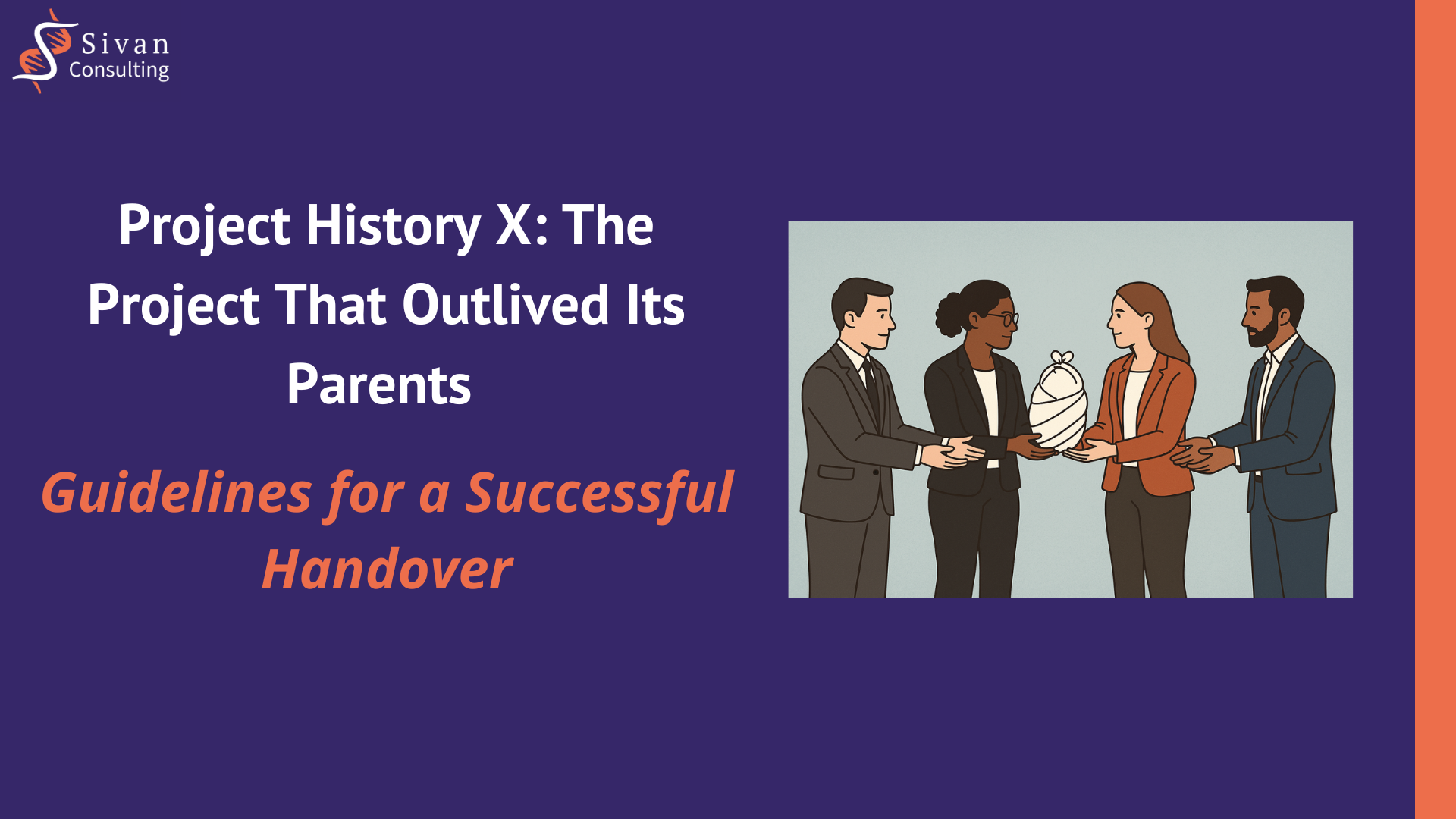

Every Project Plan Assumes People Don’t Leave. Reality Check: They Do.
A few years ago, I took over a project that was already underway. The first consultant had taken a new full-time role, timelines had slipped, and just as I found my footing, the client’s Insight Lead announced they were leaving, too.
Once you have spent a few years in consulting or worked in-house at a Pharma or Med-tech company, you will likely have seen a mid-project turnover on either the consultancy’s or the company’s side, particularly for longer engagements.
Here are a few practical lessons from my own experience and from conversations with clients and colleagues who’ve been through the same.
Diagnostic checklist: Why a well-structured handover is critical
A weak handover wastes time and momentum.
Too often, it’s little more than a 15-minute call between two people in the same role before everyone pretends the project can continue.
But it’s worth pausing to ask: what’s actually lost when someone leaves?
- Loss of context: During both the proposal and project initiation phases, multiple discussions will have taken place regarding the context and importance of the project beyond what is outlined in the RFP or SOW. Given the variety of ways people take notes, these may not be centralized or easily accessible.
- Stakeholder nuance: we all know the importance of managing both immediate relationships on a project team and the deeper stakeholder relationships, both within the consultancy and the client side. These will be even less likely to be documented than the context.
- Shifting objectives: even for a relatively short project, there could have been a shift in objectives/needs on the client side, which can be missed in the transition if the new relationship is not up to date
Any one of these can cause a project to stall and the final deck to end up on the dusty deliverables we never use shelf.
Handover or project restart?
Given this, we need to ensure an effective handover. Although it would be impractical to “restart” the project, utilizing some of the kick-off stages is a useful approach.
Everyone involved needs a pragmatic mindset, built on three things:
- Curiosity without ego
- Comfort with a level of ambiguity in a new working relationship
- Respect for prior work while re-testing assumptions
Situation 1: Changing the lead consultant on a team or a consultancy delivering the projects
Joining a project halfway through as a consultant is like walking into a movie at the 45-minute mark; the plot will make sense, but only if you ask the right questions fast.
- Revisit the priorities and hypotheses with the client: Priorities may have shifted since the kick-off. A longer session reviewing why the project is being done, what it will feed into, when those events happen, and what the client team’s existing hypotheses are is a critical first step
- Re-map the stakeholder landscape: are the decision-makers the same? Are the people who will read and use the report the same? Have any of them changed opinion or attitude since kick-off or external events impacted them? These are the right questions to explore with the client lead early.
- Re-read the data and early outputs with a fresh perspective: Depending on the project’s timing, initial findings may have already been presented. With a new perspective, you can review these to see how they address the objectives and identify any new aspects to analyze.
- If you inherit work from another consultancy, review their findings and identify where additional research can strengthen the story.
Of course, a handover is never one-sided. For every consultant stepping in mid-project, there’s an insights lead watching someone new walk through the (virtual) door. How that dynamic plays out determines whether the project stalls or finds fresh momentum.
Here’s what the client side can do to make the transition a success.
- Be transparent about what’s changed in objectives or internal politics.
- Be patient when re-explaining the project and contextualize any preliminary findings from your perspective.
- Permit challenging of earlier assumptions and avoid a “just finish it” mindset.
A short rediscovery sprint can add significant value and avoid potential headaches later on.
Situation 2: Changing Insights Lead Mid-Project
Stepping into an ongoing project as an insights lead is equal parts detective work and diplomacy, as you understand what has been done and why, and manage your internal stakeholders.
- Rebuild context: Revisit the original business question and its relationship to pipeline or brand decisions, as priorities may have shifted since the kickoff.
- Reconnect with stakeholders: Ask who’s really invested in the outcome and what decisions depend on it. Who was involved in kick-off calls or who is linked on the organizational chart rarely tells the whole story, and it’s essential to understand how people in your organization will utilize the findings to achieve their goals.
- Re-set expectations: Be open with your consultant about what you do and don’t yet know. It invites support and collaboration without making either side worry about stepping on toes.
- Don’t rush to prove ownership: It’s tempting to stamp your style on day one, but that can frustrate the consultancy midway through delivery. Take the time to shape the project gradually so that the outputs align with your expectations.
Now flip it, you’re the consultant supporting a new insights lead. This is where emotional intelligence quietly becomes the most valuable skill in your toolkit.
Your role shifts from driving the project to providing short-term stability. You hold the continuity, context, and working memory of what’s gone before.
- Re-onboard your client: provide a narrative summary of what has been done and why, rather than a data dump of materials created.
- Surface assumptions: Highlight which conclusions are solid and which remain hypotheses to build trust and invite collaboration.
- Be a translator, not a historian: Don’t defend the past lead’s choices; explain their logic and open the door to refine them.
- Keep momentum alive: Offer a quick re-alignment session or “mini discovery workshop” — it helps the new lead feel ownership without losing project continuity.
Closing
Ultimately, personnel transitions in projects shouldn’t cause crisis management or panic. However, it’s essential to remember that insight work relies on relationships as much as it does on research.
When people change, context changes, and that’s when your soft skills keep things on track.
Have you inherited a project and used any of these points? If you have tips or tricks that have worked for you, please share them below or with me via message, and I’ll add them in.