
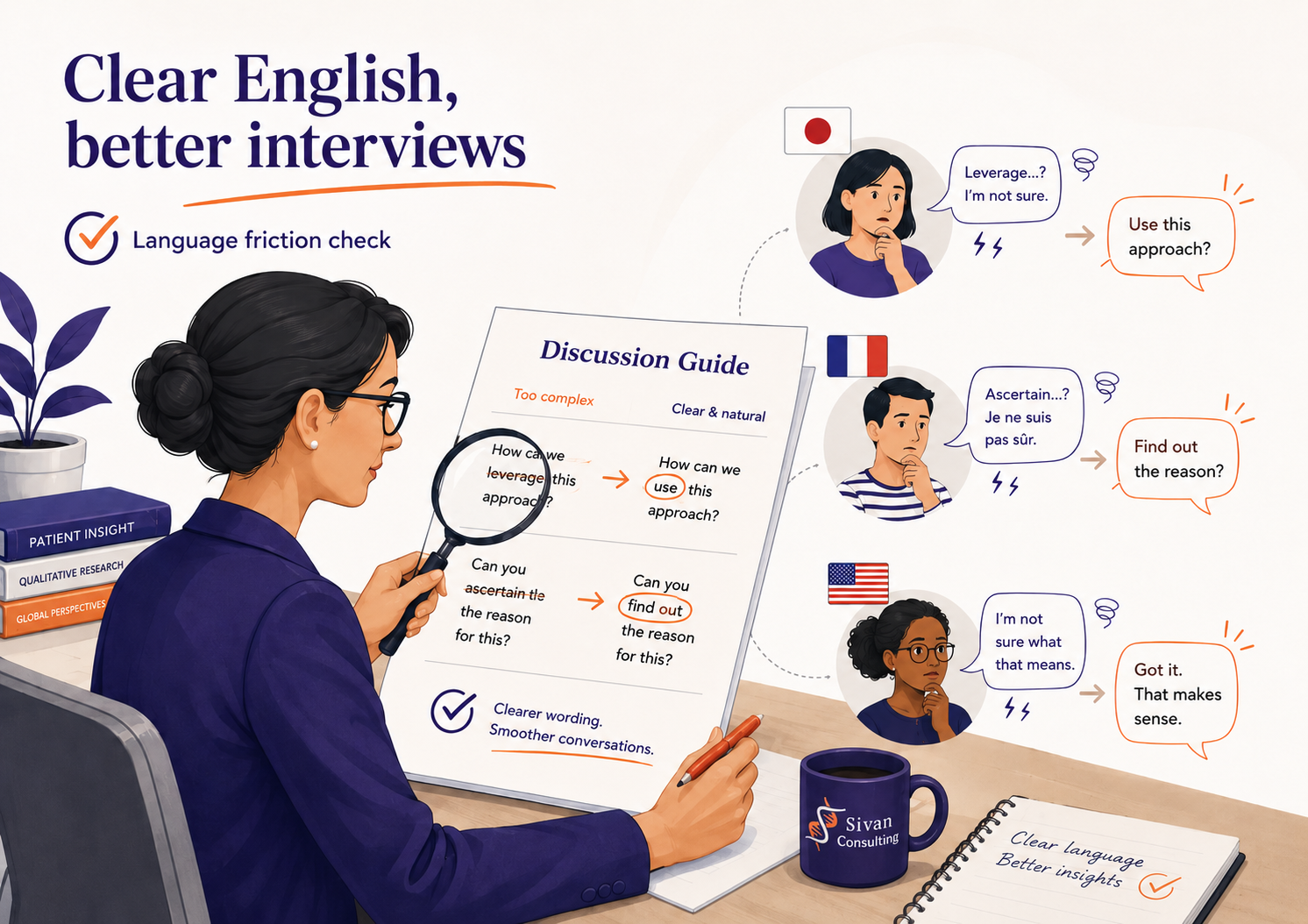

One of the easiest traps in international primary research is assuming that “plain English” is automatically clear English.
When preparing a primary research discussion guide, it is not unusual to spend 1–2 weeks reviewing, iterating, and refining it. Logic, flow, timing, bias, and alignment with the research objectives are checked before a client even sees the first draft.
But there is another important layer: linguistic friction. I was reminded of this recently when a (non-native-speaking) client paused on a word in a guide question.
They had needed to check the meaning, which made the decision easy: remove the word and replace it with a short, clearer phrase.
I work with many colleagues and respondents who use English professionally every day, often with a level of fluency that can make native speakers complacent.
But one thing to remember is that fluency is not the same as every word being instantly available, especially under pressure or in a technical conversation. Even a small moment of recall can interrupt the flow of an interview and pull the respondent away from the substance of the answer.
Where possible, ask someone who teaches English as a second language to review the guide with a specific brief: identify wording that may cause unnecessary friction.
– Colloquial phrases (e.g., a bit of a faff, tricky, a mixed bag)
– Idioms (e.g., boil the ocean, kick the tires)
– Uncommon verbs (e.g., elicit, ascertain, articulate)
– Overly consulting/commercial language (e.g., leverage when you could replace it with use)
The aim is simple: make the interview easier for the respondent and more useful for the business.
If the guide is clear, natural, and easy to answer, you are more likely to get the depth of response needed to inform positioning, messaging, segmentation, access strategy, or whatever commercial decision the research is there to support.
If you’re planning on developing a discussion guide for upcoming interviews and need a set of eyes over, get in touch for a quick audit.